JFW on Rhino Poaching and the Rhino Horn Trade Ban

In late August and early September I traveled to South Africa and Swaziland to look at what’s being done to combat the rhino poaching crisis. My analysis is now online at National Geographic News.

JFW on CCTV-America Ivory Trade Debate
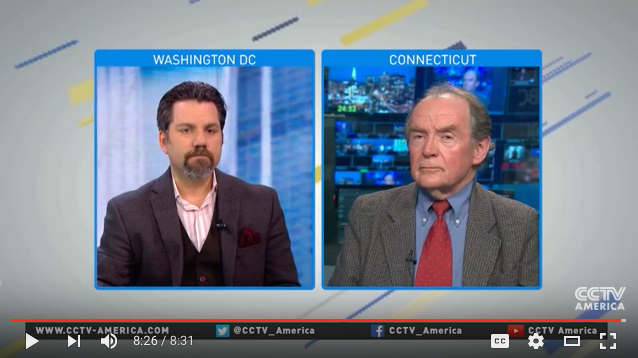
I was interviewed on CCTV-America last night on the ivory trade in a debate with Adam Roberts, CEO of Born Free USA. As always, not enough time to make a number of key points, but was able to discuss some critical issues. The 8-minute exchange is here.
Kenya’s 100 ton ivory burn

On April 30, 2016, Kenya will incinerate 105 metric tons of ivory—5% of global stocks— to “send a message.” Does this make sense? Or is it a “self-delusional publicity stunt,” as Mike Norton-Griffiths and Daniel Stiles wrote in the Times of London today, one that could cause a spike in ivory prices, and stimulate more poaching?
Louise Osborne’s piece, “To burn or sell ivory: Which can put an end to elephant poaching?” also appeared today in Deutsche Welle. She surveys current pro-burn conservation opinion on the planned destruction and also includes my take on the matter:
“John Frederick Walker, who has written widely on the trade of ivory, says ivory has been valued since prehistoric times and is not simply a ‘passing fad.’
‘The earliest carvings humans ever made were from the ivory of woolly mammoth,’ Walker told DW. ‘The attraction to ivory is embedded in world culture, from ancient Egypt to Europe to the far East. It’s a fantasy to think demand is ever going to disappear entirely,’ Walker said.
Instead, Walker advocates a highly restricted, controlled legal trade in naturally occurring ivory. This would work through use of techniques such as radiocarbon dating, micro-chipping and databases to keep track of the industry….”
Unfortunately, such arguments for harnessing demand through managing trade in legal ivory are increasingly viewed as fringe opinions. That leaves only ivory stockpile destruction and ivory prohibition as strategy options, neither of which is likely to reduce elephant poaching.
How the rare Giant Sable escaped being bred out of existence
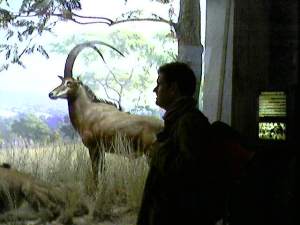
Pedro Vaz Pinto at the American Museum of Natural History’s Giant Sable diorama
Pedro Vaz Pinto, the Angolan researcher who heads conservation efforts to ensure the survival of his country’s national animal, the giant sable antelope, is the lead author of a just-published paper, “Hybridization following population collapse in a critically endangered antelope” in Nature Scientific Reports (link here). It was Vaz Pinto’s 2009 capture operation that isolated a remnant giant sable population in Cangandala National Park to prevent hybridization with roan antelopes and allow the subspecies to recover.
Will Secret Wildlife Imports Doom Ultra-Rare Giant Sable?

credit: Richard Estes
My report on the latest threat to the critically endangered giant sable antelope of Angola is now online at National Geographic News.
JFW on ivory trade at ASIL meeting in Washington DC

On April 9th, I joined Craig Hoover, U.S. Fish & Wildlife Service, Susan Lieberman, Federal Advisory Council on Wildlife Trafficking, and Anna Frostic, Humane Society of the U.S., on an American Society of International Law panel in Washington, DC organized by Rachelle Adam of Hebrew University. The subject? “Can International Law Help Prevent the Rapid Disappearance of Wildlife?” The entire panel can be seen on YouTube. My presentation starts at 17 minutes in, and runs for 13 minutes.
The Case for a Legal Ivory Trade
Ivory Trade Debate: Should the International Ban on Ivory Be Lifted?

“In a Yale Environment 360 debate, author John Frederick Walker and conservationist Mary Rice offer opposing views on whether the global ban on ivory trading should be eased. Walker argues that a partial lifting of the ban would reduce demand for illicit ivory, while Rice insists such a move would only accelerate the slaughter of Africa’s elephants.” Read the entire debate here.
How China Could Decide the Future of Africa’s Elephants


My most recent piece on the poaching crisis, “How China Could Decide the Future of Africa’s Elephants,” argues for regulated legal ivory trade as a means to engage with China in the elimination of trafficking in tusks. It’s just been posted on the National Geographic News Watch blog, A Voice for Elephants. Here’s the link.
JFW discusses rhino horn trade on HuffPost live
 I appeared on HuffPost Live’s “GreenBrief with Josh Zepps” program to discuss South Africa’s decision to seek permission from CITES to sell some of its rhino horn stockpile. The country hopes to undermine the black market in this product, valued for its presumed medicinal value in Asia, and also to raise funds to conserve this animal, now plagued by poaching. South Africa is home to 73 per cent of the world’s rhinos, including over 90% of white rhinos, which it brought back from near extinction last century.
Click here.
The rhino horn segment starts at 17:18 and runs to 26:08.
Rethinking Ivory: Why Trade in Tusks Won’t Go Away
 My latest article, “Rethinking Ivory,” appears in the Summer 2013 issue of World Policy Journal, and is now available online. It challenges the conventional wisdom on the ivory trade and argues that a well-regulated commerce in tusks could offer a realistic way forward for elephant conservation.
 John Frederick Walker
leave a comment