JFW Center for Book Arts Interview

I was interviewed by Kate Burns for the Center for Book Arts’s blog as part of its Friday Insight series. The interview can be found here, along with images of recent work.
Diamond Mining Threatens Giant Sable Antelope
The magnificent giant sable antelope, a critically endangered sable subspecies that happens to be the national animal of Angola, needs all the help it can get to survive. Only about a hundred of these creatures are left. Diamond mining in its long-isolated habitat could be the death-knell for this walking emblem.

Colin McClelland, reporter for Bloomberg News in Angola, has broken a story on state gem company Endiama EP, which had drawn up plans to expand diamond mining into the Luando Reserve, critical environment for the giant sable. McClelland interviewed Endiama spokesman Antonio Freitas, who stated that “Endiama’s main goal is to protect the palanca negra [giant sable].”
Angolan biologist Pedro Vaz Pinto, who has rescued a small number of the animals for a captive breeding program nearby, says he’s encouraged by Endiama’s response, but warns that “a concession in that location must be blocked,” as it would result in roads, bridges, and camps being built in what is now undisturbed giant sable habitat.
Click here for a link to this story.
JFW ivory interview on Austrian Broadcasting Corporation
Elephant poaching has been much discussed recently in global media, and at the just-concluding CITES conference in Bangkok, for good reason — elephant killings are at an alarming high.

I was interviewed by Chris Cummins on Austrian Broadcasting Corporation’s radio station FM4, which has an English language news magazine program called “Reality Check.” The piece is “The Ivory Wars,” and I’m included in the 15 minute podcast (starting at 12:30 minutes into it), and also in the story that accompanied it. Click here for the podcast/story, which covers the crisis, and what might be done to address it.
Giant Sable Genetic Research Critical to its Conservation

Pedro Vaz Pinto at the American Museum of Natural History’s Giant Sable diorama
I had the privilege of traveling with Angolan biologist Pedro Vaz Pinto last week as he visited natural history museums from Washington, DC to Cambridge, Massachusetts. Stops included the Smithsonian, the American Museum of Natural History, Yale Peabody, and Harvard’s Museum of Comparative Zoology. His mission? To obtain snippets of skin and tissue from ultra-scarce specimens of Hippotragus niger variani, the giant sable antelope of Angola.
Handsome and sleek as show ponies, the common sable subspecies seen in Botswana, Zambia, and South Africa makes visitors on game-viewing safaris reach for their cameras. But they pale in comparison to the majestic giant sable, found only in Angola, and an icon there. The coal-black males, which carry scimitar-shaped horns over five feet in length, are featured on the country’s currency and the tailfins of its airline. Even the national soccer team is named after the antelopes—which also happen to be one of Africa’s most endangered mammals.
Vaz Pinto estimates that only a hundred of these walking emblems remain.
On a daringly ambitious 2009 expedition into the remote Luando Reserve, Vaz Pinto managed to pull off a conservation coup and locate the remnants of a population long feared a casualty of Angola’s 27-year-long civil war. He went on to dart and relocate a giant sable bull and nine females to start a captive breeding program in nearby Cangandala National Park. (Read my two-part Africa Geographic article on the expedition, “Antelope From the Ashes”– click here for Part I and Part II). So far, the protected herd there, bolstered in number by subsequent translocations, has produced five calves this year.
But Vaz Pinto is all too aware that field work, not matter how impressive, isn’t enough to ensure the giant sable’s future. He’s in a race against time, against bush-meat poaching, against inadequate resources for the nation’s parks and reserves. For the past decade, he’s cajoled officials and the military for support, and local oil companies, like Exxon-Mobil, for funds.
Now he needs more attention from the zoological community. In the past, the taxonomic status of Angola’s legendary antelope was clouded by doubts that it was anything more than a large local variant of the unendangered common sable.
Recent DNA research has confirmed the giant sable’s subspecies status, but Vaz Pinto wants to go a step further. He’s doing doctoral research in the CIBIO lab at Oporto University, Portugal. “We expect to sequence the entire giant sable genome next year,” he says. Such detailed genetic information would provide critical help in guiding the captive breeding program currently underway. And it also would underscore the giant sable’s stature, hopefully spurring an international push for the conservation it desperately needs.
Vaz Pinto needs samples of historic giant sable material he can analyze. But requests for even tiny snips of skin aren’t treated lightly by museums. It amounts to destructive sampling of a limited supply of specimens. Fortunately, the conservation implications of his ground-breaking laboratory research seem to be overcoming institutional scruples. So far, he’s receiving strong encouragement for his next achievement on behalf of Angola’s national animal.
The Leopard in the Vineyard
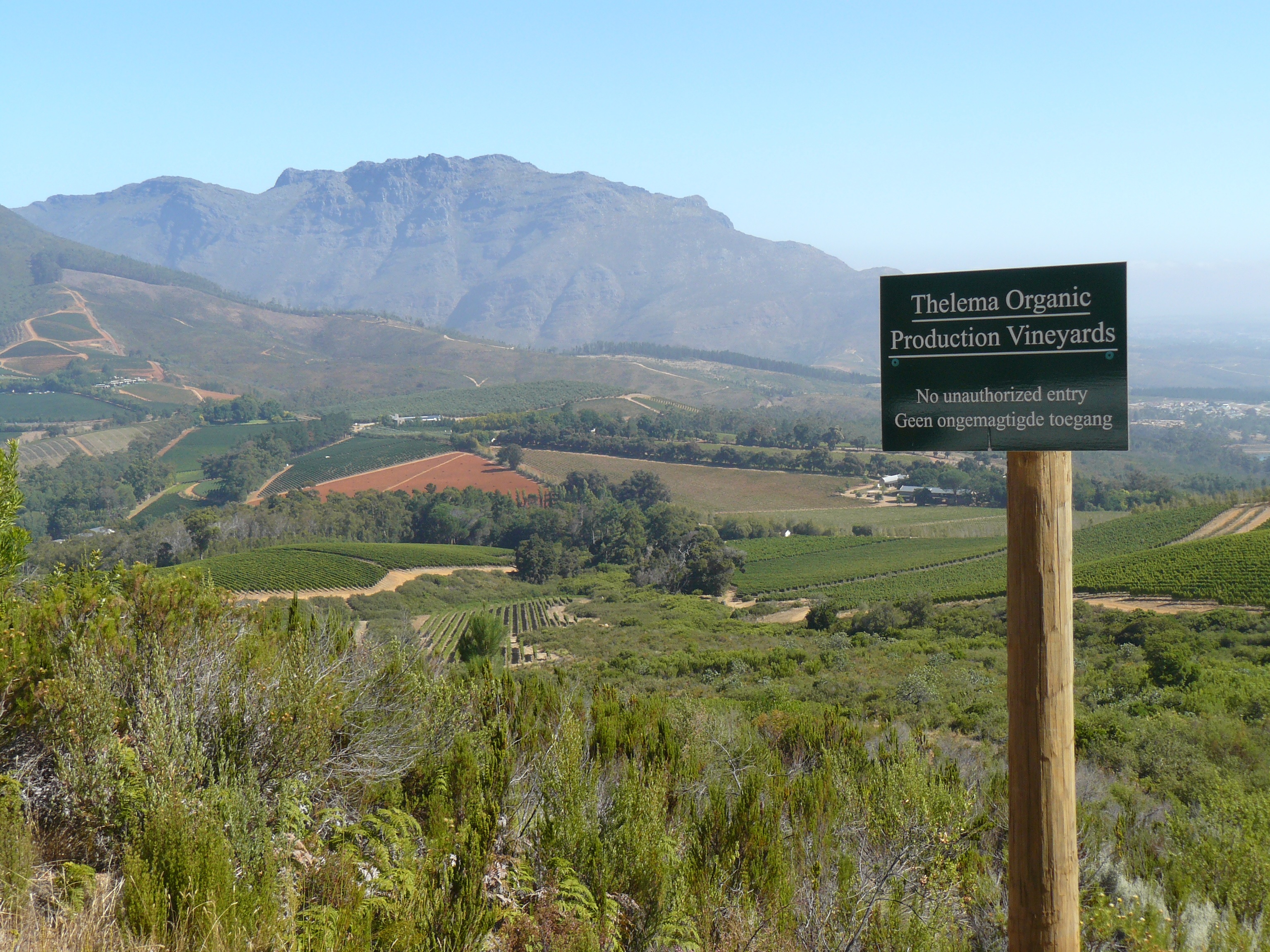 My feature article, “The Leopard in the Vineyard,” has just been published in the September issue of Africa Geographic. I was pleased to have eight pages for an overview of the South African wine industry’s efforts to balance agriculture and wildlife conservation.
You can access the article here.
Why Are Elephant’s Tusks So Valuable?
Rebecca J. Rosen, an associate editor of The Atlantic, has posted a thoughtful, analytic piece on elephant poaching that goes beyond outrage to ask the key question: what’s behind the desire for ivory?
She concludes:
“The power of the idea of ivory is immense, and shows no signs of waning…perhaps the only hope is that the price will go up and up, through greater regulation and greater monitoring, putting ivory once again out of reach for even the middle class. The irony of this is…make ivory even rarer, even more reserved for only the very few, and esteem for it will only rise.”
JFW at Eastern Connecticut State University
I’ve just installed my exhibition “John Frederick Walker: The Altered Book,” at Eastern Connecticut State University’s J. Eugene Smith Library, and will be giving a lecture and studio workshop there on September 10th. The exhibition is on view through September 30th.
Artist & Author John Frederick Walker to Visit Eastern – September 10, 2012Locked Down Lepidopteran (2011). The insect order Lepidoptera includes butterflies and moths, whose mounted forms are often evoked in the artist’s work. Walker’s frequent use of bolts to lock down pages, rendering their contents inaccessible, references loss of information..Eastern Connecticut State UniversityJ. Eugene Smith Library83 Windham StreetWillimantic, CT 06226.

Hirola: Can a Muslim community point the way to saving Africa’s wildlife?

Last year I was able to go to a drought-stricken corner of Kenya near the Somalia border to have first-hand experience of a community-based conservation project that does more than involve local people—it puts them in charge.
The piece I wrote—”Where the Antelopes Play: Can a Muslim community point the way to saving Africa’s wildlife?”—is centered on a Somali tribe’s daring plan to set aside a large part of their pasture lands to conserve the last few hundred hirola antelopes remaining in the wild.
It’s just been published on TheSmartSet.com. Click here.
A Certain Curve of Horn reissued in revised and updated e-book edition
A revised and updated e-book edition of A Certain Curve of Horn: The Hundred-Year Quest for the Giant Sable Antelope of Angola issued by Grove Press is now available:

“In A Certain Curve of Horn, John Frederick Walker tells the story of one of the most revered and endangered of the regal beasts of Africa: the giant sable antelope of Angola, a majestic, coal-black quadruped with breathtaking curved horns over five feet long.
As he follows the trail of this mysterious animal, Walker interweaves the stories of the adventurers, scientists, and warriors who have come under the thrall of the beast, and how their actions would would shape the fate of the giant sable antelope and the history of the war-torn nation that is its only home.
First published in 2002, Walker’s account of his quest for Angola’s legendary animal was called ‘riveting,’ ‘fascinating,’ and ‘compelling’ by reviewers, who compared it to Peter Matthiessen’s classic, The Snow Leopard.
Walker joined the first post-war expedition that found evidence that the iconic creature had survived the country’s horrific 27-year-long civil war, but years passed before it could be photographed—and discovered to be on the brink of extinction. Now Walker brings the story full circle, taking the reader on a last-chance expedition to find Africa’s most magnificent antelope and the heart-pounding conservation triumph of its rescue.”
JFW in Center for Books Arts Exhibition July 6 – September 10
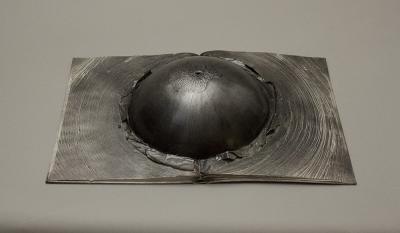
- Sudden Emergence of the Southern Hemisphere Mixed media over altered book 14.25″ x 22″ x 4.5″ 2006
≈
I’m one of the artists whose work (shown above) is included in “Multiple, Limited, Unique: Selections from the Permanent Collection of the Center for Book Arts” in New York. The exhibition was organized by Alexander Campos, Executive Director, Jen Larson, Collections Specialist, and the Collections Committee.
“For the past two years, the Center for Book Arts has been involved in a Collections Initiative, which involves the in-depth cataloguing and preservation of our extensive collection of artist books, prints, catalogues, and ephemera. This exhibition marks the culmination of the three-year Collections Initiative. The exhibition will offer an overview of the history and development of book arts in the 20th century, and examine the role of the institution in both nurturing and promoting innovative artists and preserving traditional artistic practices.”
A catalog with essays by Johanna Drucker, Erin Riley-Lopez, Amanda Stevenson and Tony White will be published in conjunction with the show, which is on view July 6 – September 10, 2011 at 28 West 27th Street, 3rd Floor, New York, NY and travels to Atlanta, Minneapolis, Houston, San Francisco and other venues.
 John Frederick Walker
leave a comment